


Inductive Vehicle Loop Installation: Turns Calculation, Driveway Saw-Cuts & Sensor Selection
Introduction: The Foundation of Reliable Access Control In our hands-on experience with after-sales maintenance of barrier gate systems and vehicle access control, we have discovered a harsh engineering reality: 90% of on-site “phantom false alarms” (where the barrier rises or lowers automatically without a vehicle present) and dangerous “mid-cycle barrier drop” incidents are not caused
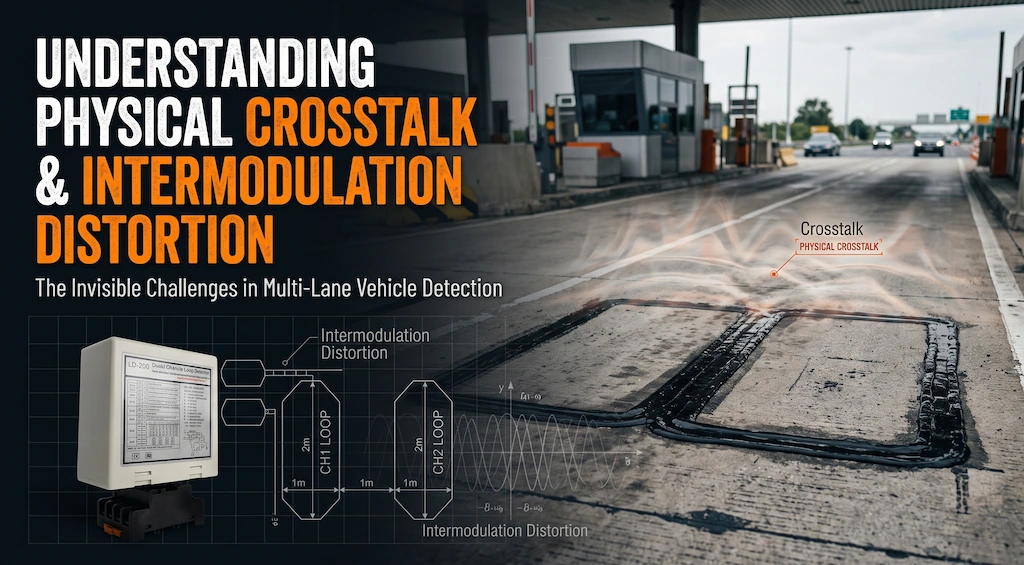
Eliminating Vehicle Loop Crosstalk: 20–100kHz Frequency Tuning & Sensitivity Matching
Introduction: The Invisible Threat in Multi-Lane Access Control During the commissioning of high-traffic multi-entry/multi-exit toll islands or systems with multiple parallel barrier gates, engineering teams often encounter an extremely frustrating phenomenon: even when the lane is clearly empty, the barrier gates frequently raise and lower on their own. Faced with these erratic “ghost vehicle” false
Eliminating Vehicle Loop Crosstalk: 20–100kHz Frequency Tuning & Sensitivity Matching Read More »
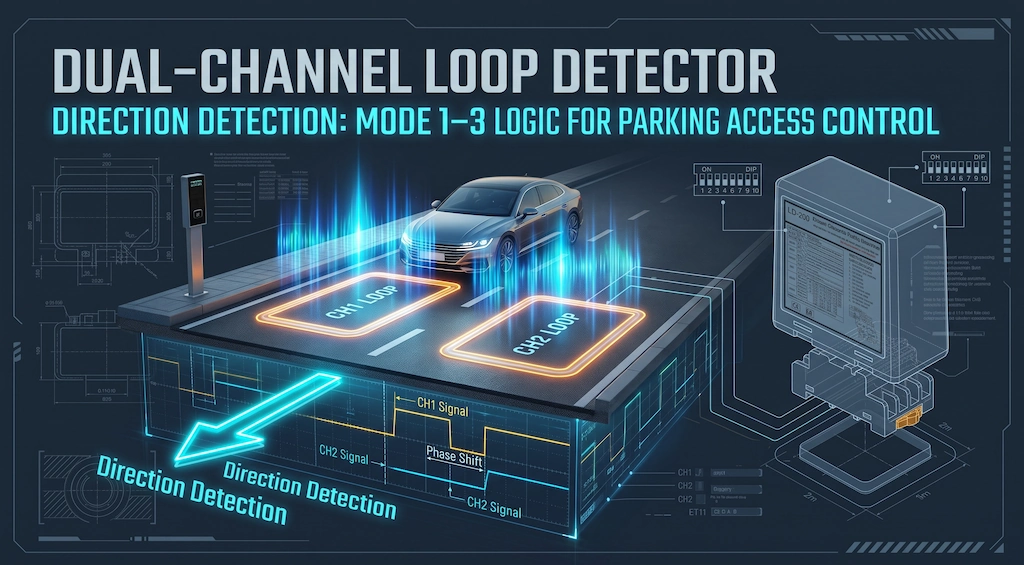
Dual-Channel Loop Detector Direction Detection: Mode 1–3 Logic for Parking Access Control
Introduction: Eliminating Directional Blind Spots in Access Control Deploying a high-precision dual channel loop detector direction detection system is the core hardware defense for resolving traffic flow chaos in modern commercial parking lots, one-way toll plazas, and single-lane, two-way ramps in older underground parking garages.In complex, dynamic traffic scenarios, traditional single-coil sensor solutions can only

Boom Barrier Anti-Smash Loop Logic: LD-100 Relay Delays, Pulse Output & Fault Self-Tests
Introduction: The Critical Timing of Barrier Gate Anti-Smash Systems Deploying and configuring a properly configured parking barrier gate loop detector is the most critical line of defense for preventing frequent incidents of falling barriers striking vehicles in commercial parking lots and logistics parks. At high-traffic, heavy-duty hubs or toll lanes, boom barriers must raise and
Boom Barrier Anti-Smash Loop Logic: LD-100 Relay Delays, Pulse Output & Fault Self-Tests Read More »
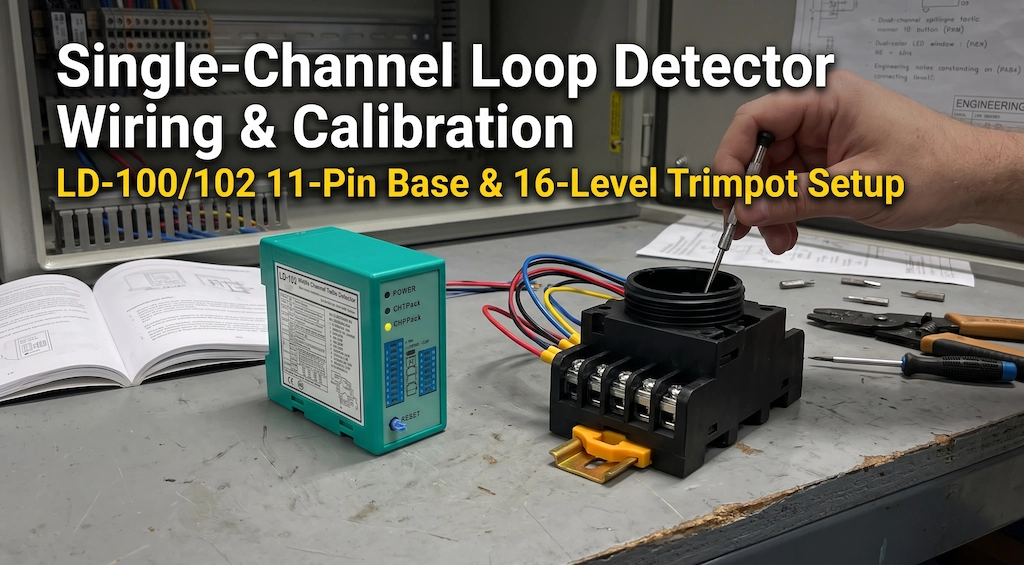
Single-Channel Loop Detector Wiring & Calibration: LD-100/102 11-Pin Base & 16-Level Trimpot Setup
Introduction: The Electrical and Physical Realities of Inductive Loop Detection Proper single channel vehicle loop detector wiring and commissioning directly determine the efficiency of access control systems and their safety thresholds in the day-to-day operations of commercial complexes, modern logistics hubs, and upscale residential communities. Many frontline engineering teams frequently encounter two typical types of